Galactic newsletter voyage – an open email envelope with stars, planets, and book covers emerging, symbolizing the adventure and exclusive content from Andrew G. Gibson's newsletter.

Unlock the Universe of Imagination: Why Subscribing to Andrew G. Gibson’s Newsletter is a Journey Beyond the Stars

Press Play to Find out Why you should Subscribe!

In the ever-expanding cosmos of literature and storytelling, there exists a beacon of adventure and discovery: the Andrew G. Gibson newsletter. This monthly communique isn’t your average addition to an inbox; it’s a curated experience by a maestro of the science fiction realm. Let’s embark on an odyssey to explore the myriad of reasons why hitting that ‘subscribe’ button is akin to possessing the key to a treasure chest brimming with interstellar wonders.

A Portal to Exclusive Content
Every newsletter from Andrew G. Gibson is crafted with the meticulousness of a literary architect. Subscribers are treated to a tapestry of new releases, special offers, and handpicked recommendations that transcend the ordinary. Imagine receiving a missive that not only informs but transforms your reading list into a catalogue of curated marvels. These emails are rare but ripe with content, ensuring that each one is a gem worth the anticipation.

A Constellation of Engagement
Connecting with an author is like charting a constellation; each point of contact illuminates the narrative sky a bit more. Andrew G. Gibson’s newsletter serves as a direct line to his universe, inviting you into a space where thoughts are provoked, and conversations begin. This isn’t just about receiving updates; it’s about engaging with the pulse of a vibrant science fiction community, one insight at a time.

First to the Frontier of Updates
Imagine standing at the vanguard of information, where news of upcoming releases and exhilarating updates reach you with the speed of light. Subscribers have the privilege of being the first to know, the first to explore, and the first to own the latest exploits from the Incredible Science Fiction series. This is your ticket to never miss a beat in the rhythm of science fiction storytelling.

A Commitment to Quality: The No Spam Odyssey
Our digital inboxes are often a battleground of unwanted missives, but here lies a promise set in the stars: no spam will ever eclipse the value of content delivered. Each newsletter is a carefully curated dispatch, ensuring that when Andrew G. Gibson reaches out, it’s with purpose, respect, and a trove of information that matters to you, the discerning reader and explorer.

The Spectrum of Science Fiction and Beyond
The Andrew G. Gibson newsletter is not merely about book launches or promotions; it’s a spectrum that covers the multifaceted aspects of science fiction and storytelling. From thoughtful articles to discussions on the future of digital wellness, the newsletter is a microcosm of diverse topics that pique curiosity and feed the mind. It’s a celebration of creativity that welcomes anyone who cherishes the art of good storytelling.

Crafting a Community Among the Stars
By subscribing, you become part of an exclusive fellowship, a community of individuals united by a passion for the imaginative and the innovative. It’s a space where fans of science fiction converge, sharing their love for otherworldly tales and the wonders of the universe, both real and fictional. This newsletter is your link to a collective that supports, inspires, and grows together.

Treasures of the Universe: Free Resources and Offers
Subscribers often receive access to exclusive content that’s not available to the wider cosmos. From sneak peeks into upcoming chapters to free resources that enhance the reading experience, these are the hidden gems reserved for the curious minds who join the inner circle.

Navigating the Cosmos with Ease: The Easy Opt-Out
The journey through Andrew G. Gibson’s universe is voluntary and exhilarating, but should you choose to dock your spaceship and explore other galaxies, the process is as easy as a click. There’s no black hole of complicated procedures, just a straightforward path back to where you started, with memories of a journey well-travelled.

In essence, subscribing to Andrew G. Gibson’s newsletter is an invitation to an odyssey that promises enrichment, engagement, and excitement. It’s a conduit to a world where science fiction isn’t just read; it’s experienced. So why wait? Subscribe now, and let your journey through the stars begin.

A sleek, futuristic remote control with streaming service logos as buttons, placed against a backdrop of a classic sci-fi scene showcasing alien landscapes and advanced spacecraft. This juxtaposition highlights the fusion of streaming technology with science fiction storytelling, symbolizing the article's exploration of how streaming platforms have impacted the narrative, production, and distribution of science fiction content.

Unfurling New Dimensions: The Impact of Streaming Services on Science Fiction Storytelling

Affiliate disclosure: Some links on this page are paid links. As an Amazon Associate I earn from qualifying purchases, at no extra cost to you.
Press Play to Listen to this article about Streaming Services and Science Fiction.

In recent years, the landscape of visual storytelling has been significantly reshaped by the advent and subsequent popularity of streaming platforms. Giants like Netflix, Amazon Prime, and Disney+ have emerged as formidable repositories of cinematic content, offering a buffet of genres to satisfy a wide array of audience tastes. Among the plethora of offerings, science fiction has found a robust platform, riding the wave of digital evolution to reach audiences in ways that were once relegated to the realms of fantasy. The aim of this exploration is to delve into the intricacies of how streaming services have affected the narrative structure, production, and distribution of science fiction series and films. The symbiotic relationship between streaming platforms and science fiction storytelling is a narrative of its own, telling tales of innovation, accessibility, and a renaissance of creativity. As we venture into the digital cosmos, the echoes of science fiction’s imaginative ethos reverberate through the algorithms and digital pathways of streaming services, forging a new era of sci-fi storytelling.

Emergence of Streaming Platforms

The rise of streaming platforms is nothing short of a digital revolution. Platforms like Netflix, Amazon Prime, and Disney+ have redefined the contours of content consumption, offering a smorgasbord of visual narratives at the fingertips of audiences worldwide. The allure of on-demand viewing has catalyzed a shift from traditional cable to digital platforms, a move significantly benefitting the genre of science fiction. These platforms have become fertile grounds for the germination of science fiction ideas, housing a burgeoning library of both classic and contemporary sci-fi series and films. The ease of access, coupled with the allure of a vast array of science fiction content, has created a symbiotic relationship between audiences and streaming platforms. The digital architecture of these platforms dovetails with the futuristic ethos of science fiction, creating a conduit for the genre to reach and resonate with audiences on a global scale.

Narrative Structure

The narrative tapestry of science fiction has seen a significant evolution with the advent of streaming platforms. The traditional episodic storytelling often seen in network television has gradually given way to more serialized narrative structures, allowing for richer character development and intricate plot arcs. Streaming platforms, with their binge-worthy model, afford creators the luxury of envisioning and executing long-form narratives. This structural shift has proved particularly conducive to science fiction, a genre known for its complex, often multi-dimensional storylines. The ability to delve into detailed and extended story arcs allows for a more nuanced exploration of sci-fi themes, be it the moral conundrums of artificial intelligence or the existential mysteries of the cosmos. The narrative flexibility afforded by streaming platforms has not only enriched the storytelling quality but has also expanded the horizon of creative possibilities within the science fiction genre.

Production

The production landscape of science fiction content has seen a notable upsurge in quality with the backing of streaming platforms. Unlike traditional networks, streaming services often have the financial muscle to invest in high-budget science fiction projects. The visual spectacle synonymous with science fiction storytelling finds a willing partner in streaming platforms, eager to bankroll ambitious projects. High production values are now a hallmark of many sci-fi series and films on these platforms, translating into better special effects, set designs, and overall production quality. The creative latitude offered by streaming services also attracts a cadre of talented writers, directors, and actors to the science fiction genre, further elevating the quality of content. This symbiotic relationship between streaming platforms and sci-fi creators has fostered an environment conducive to innovation and excellence, propelling the genre into a new era of cinematic brilliance.

Distribution

The distribution model of science fiction content has undergone a radical transformation with the emergence of streaming platforms. The global reach of these platforms has dismantled geographical and linguistic barriers, allowing science fiction content to traverse continents at the speed of light. Unlike the traditional model, where distribution could be a bottleneck, streaming platforms provide an almost instantaneous global audience to science fiction content. The algorithmic wizardry of these platforms also plays a pivotal role in audience discoverability of science fiction content, often suggesting titles based on viewing history and preferences. This digital dissemination has not only expanded the audience base but has also created a global community of science fiction aficionados. The ripple effects of this global distribution model are far-reaching, fostering a culture of inclusivity and diversity within the science fiction genre.

Viewer Engagement and Community Building

Streaming platforms have also ushered in a new era of viewer engagement and community building around science fiction content. The digital ecosystem facilitates interactions among viewers through platforms like social media, forums, and dedicated streaming service community pages. The ripple effect of a trending science fiction series or film often transcends the digital realm, sparking discussions, fan theories, and a sense of communal engagement. This level of interaction amplifies the impact of science fiction narratives, creating a ripple effect that extends beyond the screen. The discourse and community building around science fiction content on streaming platforms have fostered a vibrant, global community of sci-fi enthusiasts. The reverberations of this engagement are felt across the digital landscape, further ingraining science fiction into the cultural zeitgeist.

Conclusion

The odyssey of science fiction storytelling through the digital cosmos of streaming platforms is a narrative of evolution, innovation, and global camaraderie. The symbiotic relationship between streaming services and science fiction has not only enriched the narrative and production quality of the genre but has also created a global tapestry of sci-fi enthusiasts. As we traverse further into the digital era, the alliance between streaming platforms and science fiction storytelling is poised to explore new frontiers, continually pushing the boundaries of what’s possible in the realm of visual storytelling. The cosmic dance between science fiction and streaming platforms is a testament to the boundless possibilities that lie at the intersection of technology, creativity, and imagination.


Search the Sky Featured Image.
A surreal depiction of a green, vibrant Earth on one side and a dark, dystopian Earth on the other, encapsulated within the pages of a floating book amidst the cosmos, symbolizing the contrasting narratives of hope and despair explored in science fiction regarding environmental crises.

Environmental Crisis: Science Fiction’s Insightful Commentary on Nature’s Reckoning

Affiliate disclosure: Some links on this page are paid links. As an Amazon Associate I earn from qualifying purchases, at no extra cost to you.
Press Play to Listen to this Article!

The environmental crisis, with its elements of climate change, pollution, and dwindling natural resources, stands as a defining challenge of the 21st century. Its impacts are felt across every facet of human and natural life, sparking discourse and action in various societal sectors. Among these is the realm of science fiction, a genre long revered for mirroring societal fears, hopes, and innovations. As the environmental crisis escalates, science fiction responds with narratives exploring our ecological predicament, the dire outcomes of inaction, and potential mitigation pathways. This exploration aims to delve into how science fiction addresses and reflects ongoing environmental crises, envisioning either grim dystopian outcomes or hopeful innovative solutions.

Historical Context: Early Environmental Narratives in Science Fiction

The intertwining of environmental themes and science fiction has historical roots. It traces back to industrialization’s significant imprint upon nature. Though not fiction, Rachel Carson’s “Silent Spring” ignited public environmental awareness, paving the way for eco-themed science fiction narratives. Early tales reacting to humanity’s growing environmental impact began weaving narratives around ecological neglect consequences. These served as cautionary tales, urging society to heed nature’s warning signs. Through imaginative storytelling, these narratives highlighted the fragile interplay between humans and ecosystems, urging a reevaluation of our environmental ethos.

Modern Reflections: The Current Environmental Crisis through the Sci-Fi Lens

Recently, the environmental narrative within science fiction has evolved to mirror today’s pressing ecological issues. Works like Paolo Bacigalupi’s “The Water Will Come” and Kim Stanley Robinson’s “New York 2140” explore a climate-ravaged world’s harrowing possibilities. Vivid descriptions of submerged cities and societal collapse echo alarming climate scientists’ reports, serving as both reflection and projection of real-world environmental crises. Narrative techniques employed often mesh stark scientific data with human emotion and experience, evoking profound urgency and empathy feelings. These narratives challenge readers to confront environmental degradation harsh realities while urging envisioning a sustainable future.

Imagining Solutions: Utopian Visions and Innovative Technologies

The environmental quandary often evokes a sense of doom. However, science fiction extends hope through narratives proposing innovative solutions. Works like Ernest Callenbach’s “Ecotopia” and Star Trek’s resource-efficient future depiction reflect a utopian vision where humanity harmonizes with nature. These narratives showcase innovative technologies and societal frameworks potentially mitigating environmental crises. From renewable energy systems to circular economies, these narratives spark discussion around viable solutions. They also influence real-world discourse and innovation, serving as catalysts for environmental problem-solving.

Dystopian Outcomes: The Perils of Ignorance and Inaction

Conversely, science fiction delves into environmental neglect’s grim realities through dystopian narratives. Works like Margaret Atwood’s “MaddAddam” trilogy and the movie “Interstellar” portray dystopian futures grappling with environmental degradation’s catastrophic fallout. These narratives serve as cautionary tales, revealing ignorance and inaction’s dire consequences. The emotional resonance of these dystopian visions evokes a profound responsibility and urgency sense among the audience. They serve as stark reminders of the precarious edge our world teeters on, urging collective action to avert a dystopian environmental reality.

The Genre’s Influence: From Fiction to Action

The dialogue between science fiction and environmental crises extends beyond mere storytelling. It significantly impacts real-world attitudes and initiatives. Numerous instances showcase how science fiction has inspired technological innovations and policy frameworks for addressing environmental issues. Concepts like renewable energy and waste management depicted in science fiction often find echoes in real-world environmental solutions. Furthermore, the genre fosters broader societal discourse on environmental ethics and action, urging individuals and communities to confront and address ecological challenges.

Conclusion

The insightful environmental crises commentary offered by science fiction showcases the genre’s enduring relevance and influence. Through dystopian outcomes and utopian solutions, science fiction navigates the intricate ecological challenges landscape, offering a compelling reflection of our environmental ethos and potential sustainability paths. Readers are not only entertained but also urged to engage with our world’s critical environmental issues. As we grapple with the escalating environmental crisis, science fiction serves as a powerful conduit for exploring the human-nature interface complexity, urging us to envision a sustainable future amidst prevailing environmental doom.


A chilling visual juxtaposition of a lone astronaut facing the vast, indifferent cosmic void, encapsulating the essence of modern cosmic horror in science fiction.

Unfathomable Realms: The Resurgence of Cosmic Horror in Modern Science Fiction

Press Play to Listen to this Article!

In the vast expanse of the science fiction genre, there lurks a sinister and beguiling sub-genre known as cosmic horror. Stemming from the early 20th-century works of H.P. Lovecraft and his ilk, cosmic horror has always teased the boundaries between the known and the unknown, the scientific and the supernatural. It’s a genre that stretches the imagination to the cosmos’ dark corners, where ancient, malevolent entities and the sheer, mind-numbing scale of the universe blend into a surreal and terrifying narrative. Within the last decade, a resurgence of cosmic horror within science fiction has occurred, melding existential dread with the stark reality of an incomprehensibly vast universe. This modern marriage of eerie ancient horrors with futuristic science fiction sets a chilling tableau against which humanity’s knowledge and sanity are but fragile veneers. As we delve into this modern-day resurgence, we unfold the layers of fear, intrigue, and existentialism that define cosmic horror’s place in today’s science fiction narrative.

Historical Interplay of Cosmic Horror and Science Fiction

The eerie tapestry of cosmic horror found its way into the heart of early science fiction, creating a hybrid genre that sent shivers down the spines of its readers. Seminal works by H.P. Lovecraft such as “The Call of Cthulhu” and “At the Mountains of Madness” sowed the seeds of an unfathomable terror, where the fears of the unknown trumped any earthly horror. It was in these narratives that the cold, indifferent vastness of the cosmos became a character in itself, a malevolent entity indifferent to the petty existence of humankind. The early twentieth century, marked by scientific and industrial revolutions, was the perfect backdrop against which the cosmic horror of science fiction portrayed the stark contrast between human ambition and cosmic indifference. As humanity reached for the stars, cosmic horror was there to chillingly remind us of the unimaginable horrors that might await in the dark abyss of space. The tension between the earthly and the cosmic, the known and the unknown, set the stage for a genre that has fascinated and terrified audiences for generations.

Modern Manifestations of Cosmic Horror in Science Fiction

Fast forward to the contemporary era, where movies like “Annihilation” and series like “Stranger Things” have rekindled the eerie flame of cosmic horror within the science fiction realm. These modern manifestations blend the unfathomable unknown with the stark, often cold reality of scientific exploration and understanding. The modern world, with its rapid technological advancements and the continual push towards the outer and inner frontiers, provides fertile ground for the seeds of cosmic horror to germinate once again. The eerie landscapes, the monstrous entities from beyond, and the soul-crushing vastness of the cosmos portrayed in these narratives echo the fears and anxieties of a society on the brink of monumental cosmic discoveries, and possibly, cosmic horrors. The evolution of cosmic horror themes resonates with a modern audience that stands on the precipice of the unknown, gazing into the abyss with a mix of fear, curiosity, and awe. The blend of the ancient, eerie, and unknown with the modern, scientific, and tangible creates a narrative that is as terrifying as it is captivating.

Themes of Existential Dread and The Unknown

The core of modern sci-fi cosmic horror remains rooted in the themes of existential dread and the fear of the unknown. As our understanding of the cosmos expands, so does the realization of our insignificant place within the vast, indifferent universe. This existential confrontation with the unknown fuels the narratives of modern cosmic horror, creating a hauntingly beautiful yet terrifying tableau against which human ambition, curiosity, and fear play out. The indifference of the cosmos to human existence, the terrifyingly unknown entities that lurk in the shadows of our understanding, and the sheer scale of the universe create a narrative ripe with existential dread. The modern audience, amidst a rapidly advancing technological landscape, finds a chilling resonance with the themes of cosmic horror, as each scientific advancement peels back a layer of the unknown, only to reveal more questions, more fears, and more existential dread. The eerie dance between the known and the unknown, the earthly and the cosmic, continues to captivate the modern audience, drawing them into a narrative that is as existential as it is terrifying.

Impact on the Genre and Audience Engagement

The rekindling of cosmic horror within modern science fiction has left a lasting imprint on the genre. It has pushed the boundaries of what science fiction can explore, delving into the dark, eerie unknown that lies beyond the veil of human understanding. The audience, too, finds a morbid fascination with the themes of cosmic horror, as it resonates with the existential dread and curiosity that come with the human condition. The chilling narratives, the eerie entities from beyond, and the stark portrayal of the vast, indifferent cosmos engage the audience in a discourse that transcends mere storytelling. It forces a confrontation with the fears and anxieties of a modern society standing on the precipice of cosmic understanding, yet fearful of what horrors might lurk in the shadows. The resurgence of cosmic horror has not only enriched the tapestry of science fiction but has also engaged the audience in a narrative that is as terrifying as it is thought-provoking.

Future Trajectory of Cosmic Horror in Science Fiction

As we stand on the threshold of new cosmic discoveries and technological advancements, the genre of cosmic horror within science fiction holds a chilling promise of narratives yet to be explored. The blending of cosmic horror with other sub-genres of science fiction opens up a realm of possibilities for storytelling that delves into the human psyche, the unknown cosmos, and the eerie entities that might lurk therein. Upcoming works, fueled by the fears and hopes of a society advancing into the unknown, hold the promise of continuing the tradition of cosmic horror in science fiction. The narrative potential is vast, mirroring the incomprehensible vastness of the cosmos that cosmic horror seeks to portray. As science fiction writers and readers venture further into the unknown, the eerie, haunting call of cosmic horror will continue to resonate through the genre, providing a chilling, terrifying, yet utterly captivating narrative.

Conclusion

The resurgence of cosmic horror in modern science fiction is a testament to the genre’s enduring appeal and its ability to resonate with audiences amidst changing societal and technological landscapes. The blend of eerie ancient horrors with futuristic scientific exploration creates a narrative that is as captivating as it is terrifying. The existential themes explored within cosmic horror force a confrontation with the unknown, a reckoning with the vast, indifferent cosmos, and a reflection on the human condition. As readers and viewers, we are drawn into the eerie, haunting narrative of cosmic horror, captivated by the terrifying yet fascinating unknown. As we delve deeper into the narrative of cosmic horror within science fiction, we explore not just the unknown cosmos, but the unknown within ourselves, making it not just a genre of fiction, but a profound medium for existential exploration.


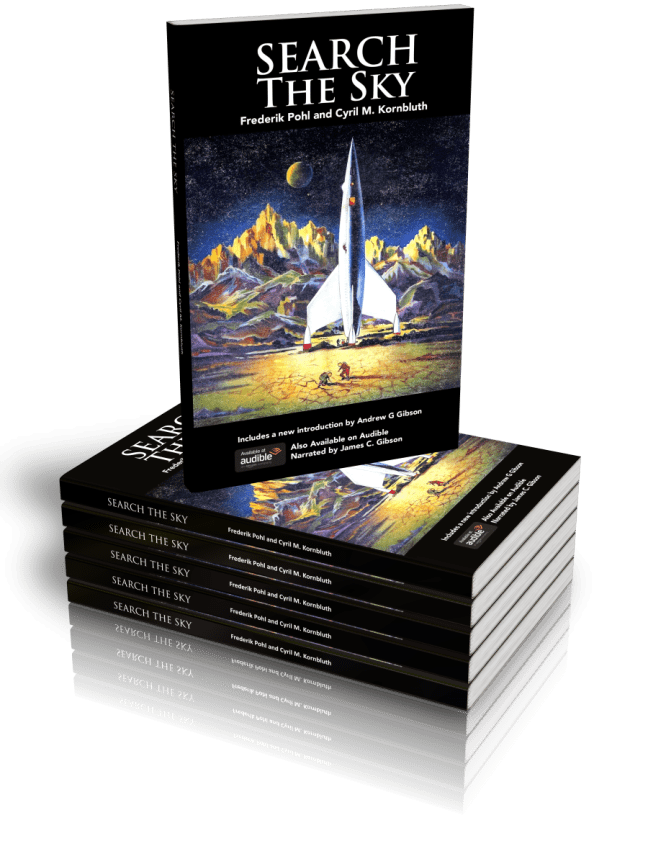
Search the Sky Promotional Flyer featuring a stack of books and some promotional text.
A well-curated mosaic of book covers, psychological symbols, and philosophical icons, representing the eclectic range of topics discussed in the last seven posts on Andrew G. Gibson's blog.

A Tapestry of Thought: Seven Recent Posts from Andrew G. Gibson’s Blog

Affiliate disclosure: Some links on this page are paid links. As an Amazon Associate I earn from qualifying purchases, at no extra cost to you.
Press Play to Listen to this Article!

Andrew G. Gibson’s blog is a treasure trove of intellectual exploration, offering readers a smorgasbord of topics that span from psychology to philosophy, and from science fiction to social phenomena. Over the past week, the blog has been particularly prolific, covering a wide array of subjects that challenge our perceptions and invite us to think more deeply. This roundup aims to provide a snapshot of these seven recent posts, summarizing their essence and encouraging you to delve into each one for a richer understanding. So, without further ado, let’s embark on this intellectual journey.

Unearthing the Gems: Forgotten Sci-Fi Novels of the 20th Century

A vintage, dusty bookshelf filled with old science fiction novels, with a beam of light illuminating the forgotten treasures, beckoning modern readers to explore the uncharted realms of imagination.

In this captivating article, Andrew G. Gibson turns the spotlight on overlooked science fiction novels from the 20th century. The post serves as a literary excavation, unearthing gems that have been overshadowed by mainstream titles. It not only introduces readers to these lesser-known works but also delves into their thematic richness and historical context. This article is a must-read for any science fiction aficionado looking to expand their reading list with some hidden treasures.

The Bystander Effect: Why Crowds Don’t Always Mean Safety

An image of a crowd of people with one individual highlighted, symbolizing the isolation one can feel even when surrounded by others due to the Bystander Effect.

This insightful piece tackles the psychological phenomenon known as the bystander effect, which explores why individuals in a crowd are less likely to offer help in emergency situations. The article delves into the social and psychological factors that contribute to this unsettling behavior, offering real-world examples and scientific studies to back its claims. It serves as a wake-up call, urging us to be more proactive and compassionate in group settings.

The McGurk Effect: How Audio and Visual Cues Alter Perception

An image of a human ear and an eye connected by neural pathways, symbolizing the interaction between auditory and visual cues in the McGurk Effect.

In this fascinating exploration, the blog dives into the McGurk Effect, a perceptual phenomenon where auditory and visual cues can lead to misinterpretations. The article is replete with examples and scientific explanations, making it accessible to both laymen and experts alike. It challenges our understanding of sensory perception and highlights the complexities involved in how we interpret the world around us.

The Mere Exposure Effect: Why Familiarity Breeds Affection

Two puzzle pieces coming together, symbolizing the comfort and affinity that familiarity brings.

This post delves into the psychological principle known as the Mere Exposure Effect, which posits that people tend to develop a preference for things merely because they are familiar with them. The article explores the science behind this phenomenon, citing research studies and offering real-world examples. It also discusses the implications of this effect in various aspects of life, from relationships to marketing strategies.

The Ship of Theseus Paradox: A Fresh Perspective

A wooden ship being reconstructed piece by piece, juxtaposed with a modern steel ship undergoing the same process, symbolizing the evolution of the Ship of Theseus Paradox.

This philosophical treatise takes on the age-old Ship of Theseus paradox, questioning the nature of identity and change. The article offers a fresh perspective on this ancient dilemma, incorporating modern theories and thought experiments. It challenges readers to reconsider their understanding of identity, continuity, and the very fabric of existence.

The Baader-Meinhof Phenomenon: Seeing Something Everywhere

A collage featuring repeated images of a common object, symbolizing the Baader-Meinhof Phenomenon of suddenly seeing something everywhere.

This article explores the Baader-Meinhof Phenomenon, a cognitive bias where something you’ve recently noticed suddenly appears ‘everywhere.’ The post delves into the psychology behind this intriguing occurrence, offering scientific explanations and real-world examples. It serves as an eye-opener, making us aware of the cognitive biases that subtly influence our perception and decision-making.

The Spotlight Effect: You’re Not the Center of Everyone’s Universe

An image of a spotlight shining down on an empty stage, symbolizing the illusion of always being the center of attention in social settings.

In this enlightening piece, the blog tackles the Spotlight Effect, a cognitive bias where individuals overestimate how much they are noticed by others. The article offers a deep dive into the psychology behind this phenomenon, backed by scientific studies and real-world examples. It serves as a humbling reminder that we are not always the focal point we imagine ourselves to be.

Conclusion

The past week on Andrew G. Gibson’s blog has been a veritable feast for the intellectually curious, offering a diverse range of topics that provoke thought and challenge conventional wisdom. Each article stands as a pillar of in-depth research and insightful analysis, contributing to a blog that is nothing short of a sanctuary for those seeking intellectual enrichment. As we eagerly await future posts, these seven articles remain a testament to the blog’s unwavering commitment to intellectual rigor and exploration.


Graphic showcasing the 'Incredible Science Fiction: Amazing Tales from the 1950s and Beyond' series. The image features a collection of classic science fiction book covers arranged in a collage, capturing the essence of the golden era of the genre. The covers vary in color and design, depicting futuristic landscapes, space explorations, and intriguing characters. The series title is prominently displayed in bold, retro-inspired typography, set against a backdrop of stars and galaxies. A sense of nostalgia and wonder emanates from the image, inviting readers to embark on a literary journey through time and imagination."
Get the Series on Amazon!
A mysterious, kaleidoscopic pattern representing the intricate, mind-bending themes explored in Philip K. Dick's works.

Philip K. Dick: Warping Reality in Science Fiction

Affiliate disclosure: Some links on this page are paid links. As an Amazon Associate I earn from qualifying purchases, at no extra cost to you.
Press Play to Listen to this Article!

Philip K. Dick was an American science fiction writer whose creative genius often delved into themes of identity, reality, and the human psyche. Although born in Chicago in 1928, he spent most of his formative and creative years in California. Often misunderstood and largely unrecognized during his lifetime, Dick’s influence in the genre has grown substantially since his passing in 1982. Today, he’s celebrated as a literary figure who was ahead of his time, constantly challenging the boundaries of science fiction to raise existential and philosophical questions. His literary legacy comprises over 40 novels and 121 short stories that have inspired countless adaptations in film and television, from “Blade Runner” to “Minority Report.” If science fiction has the power to comment on our future by using the lens of the present, then Dick was a master at contorting that lens to show us realities that were at once unsettling and enlightening.

Reality Under the Microscope: A Central Theme in Dick’s Work

One of the most striking aspects of Philip K. Dick’s storytelling is his exploration of altered states of reality. Characters in his novels often find themselves in situations where they are forced to question the nature of their existence, the environment around them, and even the fabric of time and space itself. For example, in his groundbreaking novel “Do Androids Dream of Electric Sheep?“, which was later adapted into the iconic film “Blade Runner,” Dick probes the essence of humanity through the story of a bounty hunter assigned to retire lifelike androids. The book doesn’t just engage with questions of technology and ethics; it dives deep into the murky waters of identity and sentience. Works like “A Scanner Darkly,” which delves into issues of drug abuse and the limitations of perception, further showcase his commitment to examining the fragile nature of reality.

Political and Societal Overtones: Dick as a Critic of Authoritarianism

Dick’s preoccupation with reality extended into the sociopolitical realm. His narratives often took place in dystopian futures or alternative histories, marked by oppressive regimes and systems. For instance, “The Man in the High Castle” explores a harrowing world where the Axis Powers emerged victorious in World War II. Here, Dick doesn’t just engage with the concept of an altered history; he delves into the psychology of living under a regime that has rewritten the past to serve its own ends. Novels like “Ubik” also tap into these themes, exploring the permeability of reality in a world ruled by corporate greed and omnipresent surveillance. Such works are not merely exercises in imagination but cautionary tales that warn us of the fragility of freedom and the dangers of unchecked power.

The Mystical and the Metaphysical: Dick’s Later Years

Later in life, Dick underwent what he termed a “mystical experience,” which had a profound influence on his writing. He spent a significant portion of his later years exploring religious and metaphysical concepts, often integrating them into his science fiction narratives. His “VALIS” trilogy is a testament to this, blending semi-autobiographical elements with Gnostic and mystical themes, all wrapped in a science fiction setting. The trilogy epitomizes Dick’s ability to interweave reality and fiction, fleshing out his existential ponderings within narrative constructs. These late-career shifts add a layer of complexity to his work, revealing a man in constant philosophical flux and making him a subject of interest even in religious and philosophical circles.

Legacy and Impact: The Ever-Expanding Universe of Philip K. Dick

Despite his untimely death at the age of 53, Philip K. Dick’s influence on science fiction and pop culture endures. He has entered the realm of literary legends, his works studied in academic courses and adapted into big-budget Hollywood films. And while some authors of his time may have been more focused on the nuts and bolts of science and technology, Dick’s works stand out for their emotional depth and philosophical complexity. Today, as we find ourselves in an era inundated by artificial intelligence, virtual realities, and a blurred line between fact and fiction, Dick’s writings feel more relevant than ever. They serve as a reminder that technology isn’t just about gadgets and machinery; it’s about the questions we need to ask ourselves as human beings in a rapidly evolving world.

Conclusion

Philip K. Dick was a complex individual whose work reflected his lifelong fascination with the malleability of reality, the instability of human identity, and the murky interplay between power and perception. His novels weren’t just stories; they were explorations—thought experiments that used the backdrop of speculative futures to scrutinize the human condition. While he may not have gained widespread recognition in his lifetime, his ideas continue to echo through the annals of science fiction and philosophy, making him one of the most significant and relevant writers in the genre. In a world that increasingly feels like one of his stories, Dick’s questions about reality, humanity, and the future continue to resonate with unnerving relevance.

This is a promotional image for The 100 Greatest Science Fiction Novels of all time. It has this text overlaid on a galactic background showing hundreds of stars on a plasma field. On the right hand side of the image a 1950s style science fiction rocket is flying.
Read or listen to our reviews of the 100 Greatest Science Fiction Novels of all Time!
Ted Chiang, engrossed in thought, with a backdrop of bookshelves containing classic science fiction and philosophical texts.

Ted Chiang: A Master Storyteller at the Intersection of Science and Philosophy

Affiliate disclosure: Some links on this page are paid links. As an Amazon Associate I earn from qualifying purchases, at no extra cost to you.
Press Play to Listen to this Article!

Ted Chiang is a name that carries significant weight in the realm of science fiction. Born in 1967 in Port Jefferson, New York, this American author has carved out a distinct space for himself, one where complex scientific ideas and ethical questions coexist in intricate narrative frameworks. Chiang’s journey began with a degree in Computer Science from Brown University, a technical background that might explain the meticulous research and logical structure evident in his writing. Yet, his work transcends mere technical correctness. It delves into the very nature of human experience, questioning what it means to be sentient, to communicate, and to make ethical choices. From his debut collection of short stories, “Stories of Your Life and Others,” published in 2002, to his latest acclaimed book “Exhalation,” Chiang’s literary contributions have been both sparse and impactful, a testament to his focus on quality over quantity.

Arrival of a Unique Talent: “Stories of Your Life and Others”

Chiang’s debut collection, “Stories of Your Life and Others,” placed him firmly on the map of modern science fiction. One story from this collection, “Story of Your Life,” garnered particular attention and was later adapted into the Oscar-nominated movie “Arrival” in 2016, directed by Denis Villeneuve. This story intriguingly uses linguistics as a lens to explore the concept of time and human experience, a recurring theme in Chiang’s oeuvre. It is a brilliant example of how Chiang employs scientific principles to dive into deeper metaphysical questions. Not just content with surface-level storytelling, Chiang delves into the nitty-gritty details of his concepts, often challenging his readers to think more profoundly about the world they inhabit. His unique style won him numerous accolades, including the prestigious Hugo, Nebula, and Locus Awards, cementing his reputation as a force to be reckoned with in the realm of speculative fiction.

The Philosophical Mind-bender: “Exhalation”

In 2019, Chiang returned with his second collection, “Exhalation,” another masterpiece that tackled grand themes like free will, determinism, and the nature of consciousness. Once again, the book was met with critical acclaim and added more accolades to his already impressive list of awards. The stories in this collection pose questions that linger long after the last page is turned, questions that probe the ethical and moral implications of advanced technology and scientific discovery. They echo the sentiments of some of the greatest minds in philosophy, making Chiang’s work not just captivating fiction but also a springboard for deeper intellectual exploration. Like his earlier works, “Exhalation” is also defined by its rigorous attention to detail and its focus on the internal consistency of the worlds he creates, making it both an enjoyable read and a thoughtful one.

A Slow but Significant Output

While some authors are known for their prolific output, Ted Chiang stands out for the opposite reason. His body of work is relatively small, comprising mainly two major collections and a few scattered pieces. But what he lacks in quantity, he more than makes up for in quality. Each of his stories is a finely crafted gem, created with the precision of a master jeweler. This approach has made each of his publications a significant event in the world of science fiction, awaited with bated breath by critics and readers alike. His work is a reminder that good things often come in small packages and that the power of a story doesn’t necessarily lie in its length but in its ability to resonate, intellectually and emotionally, with its audience.

The Lasting Impact of Ted Chiang

Ted Chiang’s work raises the bar for what science fiction can achieve. By blending complex scientific concepts with deeply rooted human experiences, he has expanded the boundaries of the genre. His stories are not just tales of futuristic worlds or advanced technologies; they are explorations of the ethical and philosophical questions that those futures and technologies provoke. This dual focus places him among the ranks of science fiction’s greats, writers who use speculative scenarios as tools for investigating enduring human concerns. With his keen intellect and empathetic storytelling, Ted Chiang has firmly established himself as one of the most important and intriguing voices in contemporary science fiction.

This is a promotional image for The 100 Greatest Science Fiction Novels of all time. It has this text overlaid on a galactic background showing hundreds of stars on a plasma field. On the right hand side of the image a 1950s style science fiction rocket is flying.
Read or listen to our reviews of the 100 Greatest Science Fiction Novels of all Time!
An artfully composed image that seamlessly blends elements from the seven blog posts, such as a space rocket ascending towards a digital art sky, a book and film reel in the foreground, and a plate of healthy foods, creating a visually pleasing and cohesive representation of the diverse topics discussed.

A Digest of Andrew G. Gibson’s Latest Seven Posts

Affiliate disclosure: Some links on this page are paid links. As an Amazon Associate I earn from qualifying purchases, at no extra cost to you.
Press Play to Listen to this Article!

Andrew G. Gibson’s blog is more than just a collection of articles; it’s a curated space that invites readers to engage with a diverse range of intellectual topics. From the ethical dilemmas of space exploration to the transformative power of digital art, each post serves as a window into a different facet of human experience. This roundup aims to offer a detailed summary of the seven most recent posts, providing readers with key takeaways and encouraging further exploration. By diving into these articles, we not only gain a better understanding of individual subjects but also appreciate the interconnectedness of ideas that shape our world. So, let’s embark on this intellectual journey and delve into the essence of each post.

The Politics of Space Exploration: Who Gets to Go?

Space Exploration: A captivating image of Earth from space, surrounded by spacecraft from different countries, symbolizing the political complexities and collaborative possibilities of space exploration.

In a world where space exploration is becoming increasingly privatized, the post titled “The Politics of Space Exploration: Who Gets to Go?” serves as a timely discussion. It delves into the ethical considerations and political dynamics that dictate who gets the opportunity to venture into space. The article raises important questions about inclusivity and fairness, challenging the reader to ponder the societal implications of space travel. By examining the role of governmental and private entities in shaping space policies, the post offers a nuanced perspective on the future of interstellar exploration. It’s a compelling read that leaves you questioning the ethical landscape of our final frontier.

Hyperreality: How Digital Art Challenges Realism

Hyperreality: Digital art transitioning from realistic renditions to hypereal creations, showcasing the evocative journey from traditional to modern artistic expressions.

The digital age has revolutionized the way we perceive art, a transformation beautifully captured in the post “Hyperreality: How Digital Art Challenges Realism.” This article delves into the concept of hyperrealism in digital art, exploring how it blurs the lines between reality and illusion. It discusses the techniques and technologies that artists employ to create hyperrealistic works, challenging traditional notions of what constitutes ‘real’ art. The post also engages with philosophical questions about the nature of reality itself, making it a multidimensional exploration of art and perception. It’s a thought-provoking read that offers fresh perspectives on the evolving landscape of art in the digital age.

The Hyperreal Spectrum: Understanding Reality in a Digital Age

A surreal artwork depicting a human figure stepping from a grayscale, tangible world into a colorful, digital realm, encapsulating the journey from reality to the hypereal.

Building on the theme of hyperreality, the article “The Hyperreal Spectrum: Understanding Reality in a Digital Age” takes the discussion to a new level. It delves deeper into the psychological and sociological implications of living in a digitally augmented world. The post explores how digital technologies, from virtual reality to deepfakes, are altering our perception of what is real and what is fabricated. It raises ethical questions about the potential misuse of these technologies while also highlighting their transformative potential. This article serves as a comprehensive guide to understanding the complex relationship between digital technology and human perception, making it a must-read for anyone interested in the intersection of technology and psychology.

“Search the Sky” by Frederik Pohl and C.M. Kornbluth

A visually striking image of a spacecraft navigating through a galaxy filled with stars and planets, capturing the essence of Ross's perilous journey in "Search the Sky."

For fans of science fiction, the post reviewing “Search the Sky” by Frederik Pohl and C.M. Kornbluth is a treasure trove of insights. The article offers a detailed analysis of the book’s themes, characters, and narrative structure, providing a holistic understanding of its impact on the genre. It delves into the socio-political commentary embedded within the story, highlighting its relevance in contemporary discussions about governance and human rights. The post also explores the literary techniques employed by the authors, offering a nuanced critique that enriches the reading experience. It’s an engaging review that not only celebrates the book but also encourages readers to engage with its underlying themes.

The Congress (2013): A Prophetic Film on AI, Digital Replicas, and the Future of Acting

The post about the 2013 film “The Congress” serves as a compelling analysis of the evolving landscape of the entertainment industry. It discusses how the film anticipates the future impact of AI and digital replicas on acting, offering a glimpse into a world where human actors might become obsolete. The article delves into the ethical and philosophical questions raised by the film, such as the commodification of human identity and the implications for artistic expression. It also examines the film’s narrative techniques, praising its ability to weave complex themes into a cohesive story. This post is a must-read for anyone interested in the future of entertainment and the ethical dilemmas posed by emerging technologies.

Carbs and Sugar: The Evolution of Our Diet Unpacking Over 40 Years

A vivid, side-by-side comparison featuring a nostalgic 1980s kitchen table adorned with fresh fruits, whole grains, and a small sugar bowl, contrasted sharply with a modern-day fast-food tray overflowing with soda, fries, and sugary snacks. The stark visual difference encapsulates the dramatic shift in our relationship with carbs and sugar over the past 40 years.

Diet and nutrition are topics that have garnered significant attention in recent years, and the post “Carbs and Sugar: The Evolution of Our Diet Unpacking Over 40 Years” adds valuable insights to this discussion. The article takes a historical approach, tracing the evolution of dietary guidelines and public perceptions around carbohydrates and sugar. It delves into the scientific research that has shaped these guidelines, questioning the validity of commonly held beliefs about diet and health. The post also discusses the role of the food industry in influencing public opinion, shedding light on the 

complex interplay between commercial interests and health recommendations. By offering a well-researched and balanced perspective, the article encourages readers to critically evaluate the dietary choices they make, urging them to look beyond popular trends and seek evidence-based guidance.

The Impact of “Wolfbane” by Frederik Pohl and C.M. Kornbluth

Wolfbane: On one side, a detailed, almost photorealistic Pyramid would be depicted. It would be illuminated from within, casting a soft, eerie glow. The Pyramid's surface would be adorned with intricate patterns or symbols that hint at its dual technological and mystical nature.

The world of science fiction offers endless opportunities for intellectual exploration, a notion exemplified in the post about “Wolfbane” by Frederik Pohl and C.M. Kornbluth. This article serves as a comprehensive review of the book, dissecting its themes, characters, and overall impact on the science fiction genre. It delves into the book’s exploration of human nature, societal structures, and the ethical dilemmas that arise in a futuristic setting. The post also discusses the book’s historical context, offering insights into how it reflects and critiques the societal norms of its time. It’s a captivating read that not only enhances your understanding of “Wolfbane” but also invites you to ponder broader questions about human existence and morality.

Conclusion

The recent posts on Andrew G. Gibson’s blog offer a rich tapestry of ideas and insights that challenge conventional wisdom and provoke thoughtful discussion. From the ethical complexities of space exploration to the transformative potential of digital technologies, each article serves as a catalyst for intellectual engagement. These posts not only offer in-depth analyses of individual topics but also reveal the interconnectedness of seemingly disparate subjects. By engaging with these articles, readers are invited to expand their horizons and participate in a meaningful dialogue about the complexities of our ever-changing world.

Graphic showcasing the 'Incredible Science Fiction: Amazing Tales from the 1950s and Beyond' series. The image features a collection of classic science fiction book covers arranged in a collage, capturing the essence of the golden era of the genre. The covers vary in color and design, depicting futuristic landscapes, space explorations, and intriguing characters. The series title is prominently displayed in bold, retro-inspired typography, set against a backdrop of stars and galaxies. A sense of nostalgia and wonder emanates from the image, inviting readers to embark on a literary journey through time and imagination."
A visually striking image of a spacecraft navigating through a galaxy filled with stars and planets, capturing the essence of Ross's perilous journey in "Search the Sky."

“Search the Sky” by Frederik Pohl and C.M. Kornbluth

Affiliate disclosure: Some links on this page are paid links. As an Amazon Associate I earn from qualifying purchases, at no extra cost to you.
Press Play to Listen to this Article!

“Search the Sky,” a science fiction masterpiece by Frederik Pohl and C.M. Kornbluth, offers a deep exploration into the complexities of interstellar colonization. First published in 1954, the narrative follows Ross, a resident of Halsey’s Planet, who is tasked with an urgent mission to investigate the decline of other human colonies. What sets this story apart from other space travel narratives is its incorporation of faster-than-light travel, a technological advancement that adds a unique layer of complexity to the genre. This feature allows the story to transcend typical space travel limitations, opening up a broader canvas for the authors to explore intricate societal and psychological themes. The novel serves as a compelling lens through which to examine human psychology, societal structures, and the moral quandaries that come with technological progress.

Plot Summary

The plot centers around Ross’s mission, which is made possible by a specialized spacecraft equipped for faster-than-light travel. This technological marvel enables him to traverse vast interstellar distances in a relatively short period, allowing him to visit multiple colonies facing unique challenges. From colonies governed by authoritarian regimes to those paralyzed by societal apathy, Ross’s journey becomes a rich tapestry of human experience. The authors use these diverse settings to delve into a myriad of human behaviors and societal challenges, making the plot a multifaceted exploration of the human condition. The urgency of Ross’s mission adds a layer of tension to the narrative, making each discovery and interaction crucial to the overarching quest to understand the decline of human civilization across the stars.

Themes

  1. Human Nature and Society: Search the Sky offers an in-depth examination of human nature’s dual role in both the formation and decay of societies. Each colony Ross visits serves as a microcosm of human behavior and governance, reflecting both the strengths and weaknesses inherent in humanity. The novel scrutinizes how human nature can be both a catalyst for societal growth and a hindrance, leading to stagnation or even decline.
  2. Technology and Dependence: The novel provides a critical look at society’s over-reliance on technology, particularly focusing on the ethical implications of advanced space travel technologies like faster-than-light crafts. It questions whether such advancements truly serve humanity or lead to unforeseen complications that could threaten the fabric of society.
  3. Existential Crisis: The declining populations across colonies serve as a metaphor for a broader existential crisis. The story raises poignant questions about the purpose and sustainability of human expansion into space, making the reader ponder the ethical and existential implications of colonization.

Characters

  • Ross: Ross is a complex character who undergoes significant personal growth throughout his journey. His transformation from a somewhat naive individual to a seasoned traveler adds a relatable human element to the story’s grander themes. His experiences and interactions with various colonies provide valuable insights into the complexities of human nature and society.
  • Secondary Characters: The individuals Ross encounters in each colony are not mere placeholders but complex, multi-dimensional characters. They each contribute to the story’s thematic richness, offering different perspectives on the central issues and adding layers of complexity to the narrative.

Writing Style

Frederik Pohl and C.M. Kornbluth employ a prose style that strikes a balance between readability and thematic depth. The pacing is well-calibrated, allowing for immersive world-building without sacrificing the narrative’s momentum. Dialogue is used effectively to reveal character motivations and to provide insights into the various societies Ross encounters. The authors’ ability to weave complex themes into a compelling narrative makes the book a rewarding read for those interested in both the science fiction genre and the study of human behavior.

Conclusion

“Search the Sky” is a compelling and thought-provoking read that offers a multifaceted look at human nature, societal complexities, and the ethical implications of advanced space travel technologies. Its intricate plot, well-developed characters, and deep thematic undertones make it a timeless classic in the science fiction genre. The novel serves as a mirror reflecting the complexities of human nature and society, making it a must-read for anyone interested in exploring the ethical and psychological dimensions of human existence.

Search the Sky Featured Image.
Wolfbane: On one side, a detailed, almost photorealistic Pyramid would be depicted. It would be illuminated from within, casting a soft, eerie glow. The Pyramid's surface would be adorned with intricate patterns or symbols that hint at its dual technological and mystical nature.

The Impact of “Wolfbane” by Frederik Pohl and C.M. Kornbluth

Affiliate disclosure: Some links on this page are paid links. As an Amazon Associate I earn from qualifying purchases, at no extra cost to you.
Press Play to Listen to this Article!

“Wolfbane” is a science fiction novel penned by the collaborative genius of Frederik Pohl and C.M. Kornbluth, first published in 1959. The book delves into a post-apocalyptic world where Earth has been stolen from its orbit by a mysterious alien entity known as the Pyramids. The narrative explores the complexities of human society, individual freedom, and the unknown, all set against the backdrop of a world struggling to understand its new cosmic reality. This article aims to provide a comprehensive analysis of the novel, focusing on its themes, characters, and the societal questions it raises. We’ll also look at the scientific and mystical elements that make “Wolfbane” a compelling read.

The World of “Wolfbane”

The setting of “Wolfbane” is as intriguing as its characters. Earth has been taken out of its orbit by the Pyramids, reducing the population and leading to a bifurcation of society into Citizens and Wolves. Citizens are those who have adapted to the new conditions and live under the rule of the Pyramids, while Wolves are rebels who refuse to conform. The Pyramids themselves are enigmatic structures that have their own agenda, which includes “harvesting” humans for unknown purposes. This setting serves as a fertile ground for exploring themes of control, freedom, and the human spirit, as people grapple with their new reality.

The Character of Glenn Tropile

Glenn Tropile is a complex character who embodies the tension between societal expectations and individual freedom. He is a Citizen who becomes a Wolf, and his journey is fraught with internal and external conflicts. Tropile is caught meditating, an act that is considered taboo, leading to a significant event where an “Eye” forms above him. This moment serves as a catalyst for the unfolding drama, as Tropile becomes the subject of scientific investigation and societal scrutiny. His character serves as a lens through which the reader can explore the multifaceted issues of identity, morality, and the quest for understanding in a world turned upside down.

The Role of Science and Mysticism

One of the most captivating aspects of “Wolfbane” is its blend of science and mysticism. The Pyramids are both technological marvels and mystical entities, and the novel does an excellent job of balancing these two aspects. The community’s leaders, Haendl and Innison, use scientific instruments to study the mysterious “Eye” and the process of “Translation” that Tropile undergoes. However, the answers they find only lead to more questions, adding layers of complexity to the narrative. This duality serves to enrich the story, making it appealing to readers who enjoy both hard science fiction and philosophical pondering.

Societal Questions and Themes

“Wolfbane” raises several societal questions that are still relevant today. It explores the tension between individual freedom and societal norms, as well as the ethical implications of scientific discovery. The novel also delves into the psychology of survival, as characters are forced to adapt or rebel against their new reality. These themes are woven seamlessly into the narrative, making “Wolfbane” not just a thrilling read but also a thought-provoking one. The book challenges readers to consider what it means to be human in a world where the very definition of humanity is in flux.

Conclusion

“Wolfbane” by Frederik Pohl and C.M. Kornbluth is a masterful work of science fiction that has stood the test of time. Its intricate plot, complex characters, and thought-provoking themes make it a must-read for any fan of the genre. The novel succeeds in capturing the imagination while also challenging the intellect, offering a rich tapestry of ideas to explore. Whether you’re drawn to the scientific elements, the mystical aspects, or the deep psychological and societal questions it raises, “Wolfbane” offers something for every reader to ponder long after the final page is turned.

Wolfbane
Buy Wolfbane on Audible!