Blog

An artfully composed image that seamlessly blends elements from the seven blog posts, such as a space rocket ascending towards a digital art sky, a book and film reel in the foreground, and a plate of healthy foods, creating a visually pleasing and cohesive representation of the diverse topics discussed.

A Digest of Andrew G. Gibson’s Latest Seven Posts

Affiliate disclosure: Some links on this page are paid links. As an Amazon Associate I earn from qualifying purchases, at no extra cost to you.
Press Play to Listen to this Article!

Andrew G. Gibson’s blog is more than just a collection of articles; it’s a curated space that invites readers to engage with a diverse range of intellectual topics. From the ethical dilemmas of space exploration to the transformative power of digital art, each post serves as a window into a different facet of human experience. This roundup aims to offer a detailed summary of the seven most recent posts, providing readers with key takeaways and encouraging further exploration. By diving into these articles, we not only gain a better understanding of individual subjects but also appreciate the interconnectedness of ideas that shape our world. So, let’s embark on this intellectual journey and delve into the essence of each post.

The Politics of Space Exploration: Who Gets to Go?

Space Exploration: A captivating image of Earth from space, surrounded by spacecraft from different countries, symbolizing the political complexities and collaborative possibilities of space exploration.

In a world where space exploration is becoming increasingly privatized, the post titled “The Politics of Space Exploration: Who Gets to Go?” serves as a timely discussion. It delves into the ethical considerations and political dynamics that dictate who gets the opportunity to venture into space. The article raises important questions about inclusivity and fairness, challenging the reader to ponder the societal implications of space travel. By examining the role of governmental and private entities in shaping space policies, the post offers a nuanced perspective on the future of interstellar exploration. It’s a compelling read that leaves you questioning the ethical landscape of our final frontier.

Hyperreality: How Digital Art Challenges Realism

Hyperreality: Digital art transitioning from realistic renditions to hypereal creations, showcasing the evocative journey from traditional to modern artistic expressions.

The digital age has revolutionized the way we perceive art, a transformation beautifully captured in the post “Hyperreality: How Digital Art Challenges Realism.” This article delves into the concept of hyperrealism in digital art, exploring how it blurs the lines between reality and illusion. It discusses the techniques and technologies that artists employ to create hyperrealistic works, challenging traditional notions of what constitutes ‘real’ art. The post also engages with philosophical questions about the nature of reality itself, making it a multidimensional exploration of art and perception. It’s a thought-provoking read that offers fresh perspectives on the evolving landscape of art in the digital age.

The Hyperreal Spectrum: Understanding Reality in a Digital Age

A surreal artwork depicting a human figure stepping from a grayscale, tangible world into a colorful, digital realm, encapsulating the journey from reality to the hypereal.

Building on the theme of hyperreality, the article “The Hyperreal Spectrum: Understanding Reality in a Digital Age” takes the discussion to a new level. It delves deeper into the psychological and sociological implications of living in a digitally augmented world. The post explores how digital technologies, from virtual reality to deepfakes, are altering our perception of what is real and what is fabricated. It raises ethical questions about the potential misuse of these technologies while also highlighting their transformative potential. This article serves as a comprehensive guide to understanding the complex relationship between digital technology and human perception, making it a must-read for anyone interested in the intersection of technology and psychology.

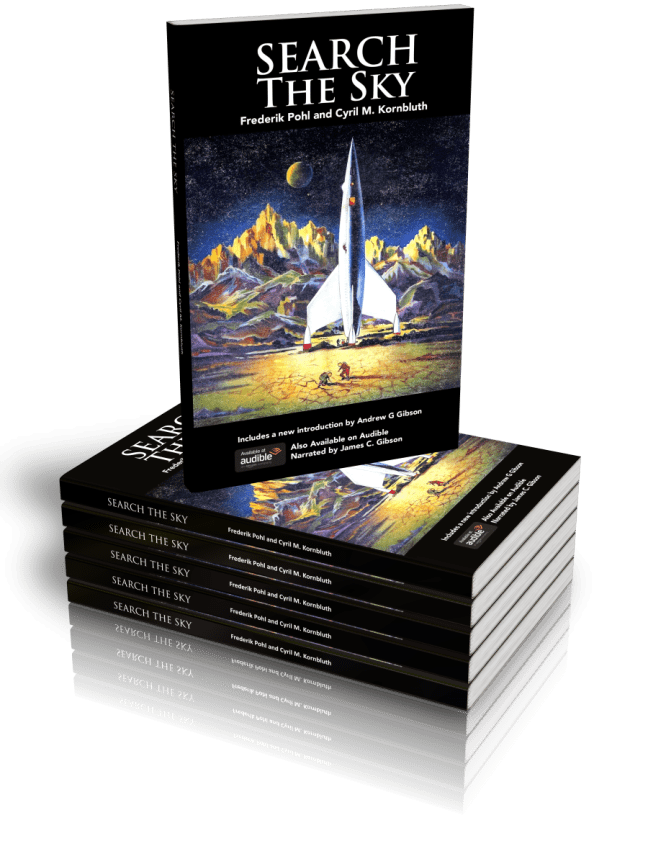
“Search the Sky” by Frederik Pohl and C.M. Kornbluth

A visually striking image of a spacecraft navigating through a galaxy filled with stars and planets, capturing the essence of Ross's perilous journey in "Search the Sky."

For fans of science fiction, the post reviewing “Search the Sky” by Frederik Pohl and C.M. Kornbluth is a treasure trove of insights. The article offers a detailed analysis of the book’s themes, characters, and narrative structure, providing a holistic understanding of its impact on the genre. It delves into the socio-political commentary embedded within the story, highlighting its relevance in contemporary discussions about governance and human rights. The post also explores the literary techniques employed by the authors, offering a nuanced critique that enriches the reading experience. It’s an engaging review that not only celebrates the book but also encourages readers to engage with its underlying themes.

The Congress (2013): A Prophetic Film on AI, Digital Replicas, and the Future of Acting

The post about the 2013 film “The Congress” serves as a compelling analysis of the evolving landscape of the entertainment industry. It discusses how the film anticipates the future impact of AI and digital replicas on acting, offering a glimpse into a world where human actors might become obsolete. The article delves into the ethical and philosophical questions raised by the film, such as the commodification of human identity and the implications for artistic expression. It also examines the film’s narrative techniques, praising its ability to weave complex themes into a cohesive story. This post is a must-read for anyone interested in the future of entertainment and the ethical dilemmas posed by emerging technologies.

Carbs and Sugar: The Evolution of Our Diet Unpacking Over 40 Years

A vivid, side-by-side comparison featuring a nostalgic 1980s kitchen table adorned with fresh fruits, whole grains, and a small sugar bowl, contrasted sharply with a modern-day fast-food tray overflowing with soda, fries, and sugary snacks. The stark visual difference encapsulates the dramatic shift in our relationship with carbs and sugar over the past 40 years.

Diet and nutrition are topics that have garnered significant attention in recent years, and the post “Carbs and Sugar: The Evolution of Our Diet Unpacking Over 40 Years” adds valuable insights to this discussion. The article takes a historical approach, tracing the evolution of dietary guidelines and public perceptions around carbohydrates and sugar. It delves into the scientific research that has shaped these guidelines, questioning the validity of commonly held beliefs about diet and health. The post also discusses the role of the food industry in influencing public opinion, shedding light on the 

complex interplay between commercial interests and health recommendations. By offering a well-researched and balanced perspective, the article encourages readers to critically evaluate the dietary choices they make, urging them to look beyond popular trends and seek evidence-based guidance.

The Impact of “Wolfbane” by Frederik Pohl and C.M. Kornbluth

Wolfbane: On one side, a detailed, almost photorealistic Pyramid would be depicted. It would be illuminated from within, casting a soft, eerie glow. The Pyramid's surface would be adorned with intricate patterns or symbols that hint at its dual technological and mystical nature.

The world of science fiction offers endless opportunities for intellectual exploration, a notion exemplified in the post about “Wolfbane” by Frederik Pohl and C.M. Kornbluth. This article serves as a comprehensive review of the book, dissecting its themes, characters, and overall impact on the science fiction genre. It delves into the book’s exploration of human nature, societal structures, and the ethical dilemmas that arise in a futuristic setting. The post also discusses the book’s historical context, offering insights into how it reflects and critiques the societal norms of its time. It’s a captivating read that not only enhances your understanding of “Wolfbane” but also invites you to ponder broader questions about human existence and morality.

Conclusion

The recent posts on Andrew G. Gibson’s blog offer a rich tapestry of ideas and insights that challenge conventional wisdom and provoke thoughtful discussion. From the ethical complexities of space exploration to the transformative potential of digital technologies, each article serves as a catalyst for intellectual engagement. These posts not only offer in-depth analyses of individual topics but also reveal the interconnectedness of seemingly disparate subjects. By engaging with these articles, readers are invited to expand their horizons and participate in a meaningful dialogue about the complexities of our ever-changing world.

Graphic showcasing the 'Incredible Science Fiction: Amazing Tales from the 1950s and Beyond' series. The image features a collection of classic science fiction book covers arranged in a collage, capturing the essence of the golden era of the genre. The covers vary in color and design, depicting futuristic landscapes, space explorations, and intriguing characters. The series title is prominently displayed in bold, retro-inspired typography, set against a backdrop of stars and galaxies. A sense of nostalgia and wonder emanates from the image, inviting readers to embark on a literary journey through time and imagination."
Space Exploration: A captivating image of Earth from space, surrounded by spacecraft from different countries, symbolizing the political complexities and collaborative possibilities of space exploration.

The Politics of Space Exploration: Who Gets to Go?

Affiliate disclosure: Some links on this page are paid links. As an Amazon Associate I earn from qualifying purchases, at no extra cost to you.
Press Play to Listen to this Article!

Space exploration has long captured the human imagination, but who gets to participate in this grand endeavor? As we stand on the cusp of a new era of space travel, the politics surrounding these missions are becoming increasingly complex. No longer is it merely a question of technological capability; it’s also a matter of political will, ethical considerations, and international cooperation. This article aims to delve into the intricate politics of space exploration, focusing on the pivotal question: Who gets to go? We will explore the historical context, the key players, the political and ethical implications, and what the future holds for humanity’s venture into the cosmos.

Historical Context

The politics of space exploration can be traced back to the Cold War era, where the United States and the Soviet Union were locked in a fierce Space Race. The moon landing in 1969 was not just a technological feat; it was a political statement of American prowess. However, the end of the Cold War saw a shift from competition to collaboration, exemplified by projects like the International Space Station (ISS). Today, the landscape is even more complex, with multiple countries and private entities vying for a piece of the cosmic pie. The question of who gets to go to space is no longer just a matter of national pride but has evolved into a complex web of political, economic, and ethical considerations.

The Players: Countries and Private Entities

The United States, through NASA and private companies like SpaceX, continues to be a dominant force in space exploration. Russia, with its long-standing space program Roscosmos, remains a key player. China’s CNSA is rapidly catching up, with ambitious plans for lunar and Mars missions. The European Space Agency (ESA) represents collective efforts from multiple European countries. Additionally, private entities like Blue Origin and Virgin Galactic are entering the fray, offering commercial space travel. Each of these players brings their own political agendas, funding mechanisms, and ethical considerations to the table, complicating the landscape even further.

Political Implications

Space exploration is not just a scientific endeavor; it has significant political implications. National security is a major concern, with countries viewing space as a strategic asset for defense and surveillance. The economic impact is also substantial, as commercial ventures promise job creation and technological advancements. Diplomacy plays a crucial role as well, with international collaborations like the ISS serving as a platform for peaceful cooperation. However, these collaborations can also become points of tension, as seen in the geopolitical complexities surrounding space missions.

Ethical Considerations

As we venture further into space, ethical questions become increasingly important. Who gets to be an astronaut? Is it fair that only a select few from specific countries have this opportunity? Representation is another concern; the space community has been criticized for its lack of gender and ethnic diversity. The advent of commercial space travel raises questions about accessibility. Will space become the final frontier for only the wealthy? These ethical considerations are not just philosophical debates; they have real-world implications that need to be addressed in policy and practice.

The Future: Mars and Beyond

The future of space exploration looks toward Mars and beyond, raising new political and ethical dilemmas. Who has the right to colonize other planets? What laws will govern these new territories? Resource utilization, such as mining asteroids for precious metals, presents another set of challenges. As we move toward a future where space travel becomes more commonplace, the need for comprehensive space laws and international treaties becomes increasingly urgent. These future missions will test the limits of our ethical frameworks and require a rethinking of our political systems.

Case Studies

The Artemis Accords serve as an example of international cooperation, outlining principles for lunar exploration and beyond. However, not all countries are signatories, raising questions about inclusivity. SpaceX’s plans for Mars colonization bring the private sector’s role into sharp focus, challenging traditional notions of space exploration as a national endeavor. China’s recent lunar missions have been viewed both as a contribution to global knowledge and a demonstration of national prowess, highlighting the dual nature of space missions.

Public Opinion and Policy

Public opinion plays a significant role in shaping the politics of space exploration. Public interest can drive funding and political support, but it can also raise ethical and environmental concerns. Policy decisions, therefore, must strike a balance between scientific ambition and public sentiment. As we move forward, the political landscape will continue to evolve, presenting both challenges and opportunities for the future of space exploration.

Conclusion

The politics of space exploration are complex and multi-faceted, involving a range of players, interests, and ethical dilemmas. As we stand on the brink of a new era in space travel, it’s crucial that we engage in a nuanced discussion about who gets to participate. Only through thoughtful dialogue and inclusive policies can we hope to make space exploration a venture that benefits all of humanity, not just a privileged few.

Graphic showcasing the 'Incredible Science Fiction: Amazing Tales from the 1950s and Beyond' series. The image features a collection of classic science fiction book covers arranged in a collage, capturing the essence of the golden era of the genre. The covers vary in color and design, depicting futuristic landscapes, space explorations, and intriguing characters. The series title is prominently displayed in bold, retro-inspired typography, set against a backdrop of stars and galaxies. A sense of nostalgia and wonder emanates from the image, inviting readers to embark on a literary journey through time and imagination."
Get the Series on Amazon!
Hyperreality: Digital art transitioning from realistic renditions to hypereal creations, showcasing the evocative journey from traditional to modern artistic expressions.

Hyperreality: How Digital Art Challenges Realism.

Press Play to Listen to this Article!

The modern digital landscape births a concept called hyperreality. This term blurs traditional lines between real and imagined realms. Parallelly, digital art blossoms, offering new tools for artists. This genre extends, morphs, or disrupts reality, creating a hyperreal experience. It leads to a compelling question: How does digital art redefine traditional notions of realism? This article delves into digital art, aiming to unravel its challenge to traditional realism through hyperreality.

Historical Context

Realism in art has a rich history, celebrated for its meticulous representation of the tangible world. Since the Renaissance, artists have strived to mirror reality. However, digital art brought a paradigm shift, introducing new means to represent and interact with reality. Early digital art explored realism using technology to create precise renditions. Yet, as digital tools evolved, artists began crafting hypereal experiences. This evolution now enables artists to create hypereal masterpieces, challenging audience perceptions.

Digital Art and Hypereality

Digital art serves as a conduit for hyperreal experiences. Digital tools enable the creation of immersive worlds. Augmented reality art, a subset, overlays digital imagery onto the physical world. Moreover, digital art allows for a melding of real and virtual realms. Various digital art pieces epitomize hyperreal aesthetics, like virtual reality art installations. The interaction between audiences and digital art evokes a hyperreal experience, making viewers question the essence of reality.

Challenging Realism

The confrontation between traditional realism and digital hypereal art is exhilarating. Digital art expands what is perceived as ‘real’ in art. Unlike traditional art confined to the canvas, digital art transcends physical limitations. It offers a dynamic, interactive realm. Viewers’ perception of reality gets challenged when navigating through digital hypereal art pieces. Digital art not only questions but also enriches the narrative of realism, making it a riveting subject of modern artistic discourse.

Impact on the Artistic Community

The ripple effects of hyperreality in digital art are palpable within the artistic community. Traditional artists find themselves at an intriguing juncture. The discourse surrounding contemporary art has been enriched by debates on hyperreal digital art. Genre boundaries within art are becoming increasingly fluid, with digital art acting as a catalyst. The exploration of hyperreal themes has birthed new artistic movements. The dialogue between traditional and digital artists on hyperreal themes creates a vibrant ecosystem for artistic innovation.

Case Studies

Several digital art projects epitomize the challenge posed to realism. Projects like virtual reality art installations provoke profound reflections on reality. Artists share the intention behind blending the real and the virtual, shedding light on their philosophical stance. Audience reception to hyperreal digital art projects is diverse. The interaction between the artist, the audience, and the hyperreal piece creates a dynamic narrative. These case studies offer a glimpse into the transformative potential of hyperreal digital art.

Ethical and Philosophical Implications

The journey into hyperreal digital art raises ethical and philosophical contemplations. The blurring of reality raises pertinent ethical questions. Philosophically, hyperreal art provokes a re-examination of reality, perception, and truth. It urges both artists and audiences to delve deeper into these fundamental concepts. Hyperreal art reflects the complex interplay between reality and illusion. It propels a rich philosophical inquiry that is bound to shape the discourse on realism in art for years to come.

Conclusion

The exploration of hyperreality through digital art unveils a captivating challenge to traditional realism. It questions, enriches, and expands the discourse on what is real. The digital canvas offers a surreal yet profound experience. It invites viewers to engage, interact, and reflect. The journey of realism, from the tangible to the digital, marks a significant chapter in artistic exploration. The narrative of hyperreality in digital art continues to evolve, promising an exciting realm of exploration for artists and audiences alike.

Hypereality and digital wellness.
A surreal artwork depicting a human figure stepping from a grayscale, tangible world into a colorful, digital realm, encapsulating the journey from reality to the hypereal.

The Hyperreal Spectrum: Understanding Reality in a Digital Age

Affiliate disclosure: Some links on this page are paid links. As an Amazon Associate I earn from qualifying purchases, at no extra cost to you.
Press Play to Listen to this Article!

In a modern world increasingly intertwined with digital interfaces and simulated experiences, the concept of hypereality has emerged as a focal point of cultural and philosophical discourse. This peculiar idea, rooted in postmodern thought, ventures beyond the traditional delineations between reality and fiction, forging a realm where the tangible and the imaginary meld into one. The concept of hypereality is not merely an academic fascination but an evolving phenomenon that resonates with the lived experiences of individuals navigating a digitally saturated environment. Its implications stretch across various spheres of human existence, from the personal to the collective, from the psychological to the societal. The concept was popularized by the French sociologist and cultural theorist, Jean Baudrillard, whose explorations into the realm of signs and symbols revealed a new domain of reality, one that is constructed, mediated, and often, misleadingly authentic. Baudrillard’s insights into hypereality beckon a deeper examination of how contemporary society interprets and interacts with the ‘real’ in an age where virtuality often overshadows physicality.

The inception of hyperreality, according to Baudrillard, is intimately linked to the proliferation of signs and symbols within a society. These symbols, through constant reproduction and dissemination, begin to detach from their original referents, creating a simulacrum, a copy without an original. In a hyperreal state, the simulacrum usurps the position of the real, becoming a truth in its own right. This transition from the real to the hyperreal is not an abrupt one, but a gradual evolution, marked by a societal inclination towards the symbolic and the mediated. The realm of the hyperreal is thus a fabricated reality, built on codes, signs, and images that dictate the perception of truth and reality. The intricate dance between the signifier and the signified in a hyperreal context paints a complex picture of reality, one that is both fascinating and disconcerting.

As digital technology burgeons, the discourse around hypereality gains substantial momentum. The digital realm provides a fertile ground for the blossoming of hyperreal experiences, be it through social media personas, immersive video games, or augmented reality applications. These virtual environments offer a semblance of reality that is often indistinguishable from the physical world, yet is fundamentally constructed and mediated. The layers of authenticity that envelop digital interactions and experiences pose quintessential questions: What constitutes reality in a digital age? How do virtual experiences shape individual and collective perceptions of the real? The digital domain, with its ability to fabricate hyperreal scenarios, pushes the boundaries of traditional reality, leading to a reevaluation of what it means to experience the real.

Consumer culture too is a potent incubator of hypereality. Brands and advertisers meticulously craft hyperreal scenarios where products transcend their material utility to embody certain lifestyles, identities, or ideals. The consumer, ensnared in this meticulously crafted web of symbolic imagery, often perceives these constructed scenarios as reflections of an attainable reality. This interplay between consumer desire, brand imagery, and hyperreal scenarios creates a cyclical narrative that fuels the relentless pursuit of the ideal, as depicted by the hyperreal imagery. The relationship between consumer behavior, brand messaging, and the hyperreal constructs a narrative that is as engaging as it is elusive.

The probing questions and ethical considerations stemming from the concept of hypereality are as myriad as they are profound. The ethical implications of living in a society where the real is constantly being negotiated and redefined are vast. The psychological impact of navigating a world where the authentic and the constructed are intricately entwined calls for a robust exploration. Philosophers, sociologists, and thinkers are drawn towards dissecting the layers of hypereality to understand its impact on human cognition, behavior, and societal structures. The discourse on hypereality is not a mere academic endeavor but a crucial inquiry into the human experience in a mediated world. The narrative of hypereality, with its complex tapestry of reality and illusion, beckons a comprehensive exploration that delves into the core of human understanding and interaction in contemporary society.

Hypereality, as a concept and a lived experience, beckons a reevaluation of the frameworks through which individuals perceive, interpret, and interact with the world. The journey into the nuances of hypereality is not just an intellectual expedition but a reflection on the human experience in a world that is increasingly mediated and constructed. The multifaceted nature of hypereality and its imbrications with digital technology, consumer culture, and philosophical inquiry form a rich domain of exploration. As individuals and as a society, the engagement with hypereality challenges conventional understandings and invites a re-imagination of what it means to live in a real, yet hyperreal world.

A visually striking image of a spacecraft navigating through a galaxy filled with stars and planets, capturing the essence of Ross's perilous journey in "Search the Sky."

“Search the Sky” by Frederik Pohl and C.M. Kornbluth

Affiliate disclosure: Some links on this page are paid links. As an Amazon Associate I earn from qualifying purchases, at no extra cost to you.
Press Play to Listen to this Article!

“Search the Sky,” a science fiction masterpiece by Frederik Pohl and C.M. Kornbluth, offers a deep exploration into the complexities of interstellar colonization. First published in 1954, the narrative follows Ross, a resident of Halsey’s Planet, who is tasked with an urgent mission to investigate the decline of other human colonies. What sets this story apart from other space travel narratives is its incorporation of faster-than-light travel, a technological advancement that adds a unique layer of complexity to the genre. This feature allows the story to transcend typical space travel limitations, opening up a broader canvas for the authors to explore intricate societal and psychological themes. The novel serves as a compelling lens through which to examine human psychology, societal structures, and the moral quandaries that come with technological progress.

Plot Summary

The plot centers around Ross’s mission, which is made possible by a specialized spacecraft equipped for faster-than-light travel. This technological marvel enables him to traverse vast interstellar distances in a relatively short period, allowing him to visit multiple colonies facing unique challenges. From colonies governed by authoritarian regimes to those paralyzed by societal apathy, Ross’s journey becomes a rich tapestry of human experience. The authors use these diverse settings to delve into a myriad of human behaviors and societal challenges, making the plot a multifaceted exploration of the human condition. The urgency of Ross’s mission adds a layer of tension to the narrative, making each discovery and interaction crucial to the overarching quest to understand the decline of human civilization across the stars.

Themes

  1. Human Nature and Society: Search the Sky offers an in-depth examination of human nature’s dual role in both the formation and decay of societies. Each colony Ross visits serves as a microcosm of human behavior and governance, reflecting both the strengths and weaknesses inherent in humanity. The novel scrutinizes how human nature can be both a catalyst for societal growth and a hindrance, leading to stagnation or even decline.
  2. Technology and Dependence: The novel provides a critical look at society’s over-reliance on technology, particularly focusing on the ethical implications of advanced space travel technologies like faster-than-light crafts. It questions whether such advancements truly serve humanity or lead to unforeseen complications that could threaten the fabric of society.
  3. Existential Crisis: The declining populations across colonies serve as a metaphor for a broader existential crisis. The story raises poignant questions about the purpose and sustainability of human expansion into space, making the reader ponder the ethical and existential implications of colonization.

Characters

  • Ross: Ross is a complex character who undergoes significant personal growth throughout his journey. His transformation from a somewhat naive individual to a seasoned traveler adds a relatable human element to the story’s grander themes. His experiences and interactions with various colonies provide valuable insights into the complexities of human nature and society.
  • Secondary Characters: The individuals Ross encounters in each colony are not mere placeholders but complex, multi-dimensional characters. They each contribute to the story’s thematic richness, offering different perspectives on the central issues and adding layers of complexity to the narrative.

Writing Style

Frederik Pohl and C.M. Kornbluth employ a prose style that strikes a balance between readability and thematic depth. The pacing is well-calibrated, allowing for immersive world-building without sacrificing the narrative’s momentum. Dialogue is used effectively to reveal character motivations and to provide insights into the various societies Ross encounters. The authors’ ability to weave complex themes into a compelling narrative makes the book a rewarding read for those interested in both the science fiction genre and the study of human behavior.

Conclusion

“Search the Sky” is a compelling and thought-provoking read that offers a multifaceted look at human nature, societal complexities, and the ethical implications of advanced space travel technologies. Its intricate plot, well-developed characters, and deep thematic undertones make it a timeless classic in the science fiction genre. The novel serves as a mirror reflecting the complexities of human nature and society, making it a must-read for anyone interested in exploring the ethical and psychological dimensions of human existence.

Search the Sky Featured Image.

The Congress (2013): A Prophetic Film on AI, Digital Replicas, and the Future of Acting

Affiliate disclosure: Some links on this page are paid links. As an Amazon Associate I earn from qualifying purchases, at no extra cost to you.
Press Play to Listen to this Article!

“The Congress,” a 2013 science fiction film directed by Ari Folman, has recently resurfaced in cultural conversations, given its prophetic themes about digitizing actors and using artificial intelligence to replace them. The movie is based loosely on Stanislaw Lem’s 1971 science fiction novel “The Futurological Congress.“

In the film, Robin Wright plays a fictionalized version of herself, who agrees to be digitally scanned so that her virtual persona can perform in films in place of her real self. This act allows the studio to own and manipulate her image in perpetuity, while she receives financial compensation and the promise to never act again. The core concept of the movie hits close to home today, as actors are currently striking over similar issues. Concerns have been raised over the use of technology to replicate an actor’s performance, thus potentially making them obsolete. The film paints a complex portrait of an industry teetering on the edge of ethical dilemmas that have far-reaching implications.

The movie grapples with an array of issues that have gained prominence in the age of digital proliferation, not just in Hollywood, but in broader contexts as well. As we see in the narrative, Robin Wright’s character starts questioning the moral implications of her decision, especially when her digitized form starts taking roles that she, as a human, would have ethically objected to. The film thrusts the audience into an existential whirlpool, forcing us to ask: What does it mean to be human in a world where your essence can be captured, owned, and manipulated by corporations? What rights do individuals have over their digitized selves? Is technology crossing a line by enabling the replication of not just our images but also our emotional expressions, skills, and even flaws? The film acts as a cautionary tale, urging us to grapple with these ethical and existential queries.

In “The Congress,” the depiction of a two-tiered world—one live-action, one animated—offers a layered critique of our increasingly digital lives. When characters enter the animated world, they’re free to assume any identity, to fulfill any fantasy, echoing the internet’s promise of anonymity and endless possibility. Yet, this freedom comes at a cost, causing characters to lose touch with reality and themselves. This duality serves as a metaphor for the modern world, where social media platforms enable alternate personas, and AI and deepfake technologies make the lines between real and artificial increasingly blurry. The consequence, as portrayed in the film, is a disconnection from authentic human experiences and ethical values, a message that resonates with increasing urgency today.

In light of current events, where actors are striking over the potential use of AI and digital technologies to replicate their work, “The Congress” feels more relevant than ever. The film’s subject matter directly correlates with the ethical questions being raised by the industry’s real-world professionals. While the fictional Robin Wright was forced into retirement as part of her deal, today’s actors are fighting for their right to work without being overshadowed by their own digital replicas. They argue that such technologies strip them of their agency and uniqueness, reducing their craft to mere data points that can be exploited. It serves as a powerful reminder that the dystopian scenarios depicted in science fiction can serve as valuable frameworks for understanding and navigating the complex ethical landscapes we may soon encounter.

Ultimately, “The Congress” serves both as a piece of visual art and a prescient social commentary. Its blend of live-action and animation, its star-studded cast, and its unique narrative structure make it a standout film, but its true genius lies in its ability to anticipate and interrogate societal issues that were barely on the horizon at the time of its release. As we find ourselves in an era where the boundaries between the digital and the real are increasingly blurred, where the ethical implications of technology are the subject of debates and strikes, this film serves as a touchstone for the essential discussions we need to be having. Whether seen as a warning or as a mirror held up to our own complex realities, “The Congress” is more than just a film; it’s a timely and haunting exploration of what it means to be human in a digital age.

The 100 Greatest Science Fiction Movies of All Time
A vivid, side-by-side comparison featuring a nostalgic 1980s kitchen table adorned with fresh fruits, whole grains, and a small sugar bowl, contrasted sharply with a modern-day fast-food tray overflowing with soda, fries, and sugary snacks. The stark visual difference encapsulates the dramatic shift in our relationship with carbs and sugar over the past 40 years.

Carbs and Sugar: The Evolution of Our Diet Unpacking Over 40 Years

Affiliate disclosure: Some links on this page are paid links. As an Amazon Associate I earn from qualifying purchases, at no extra cost to you.
Press Play to Listen to this Article!

In recent years, there has been a noticeable rise in obesity rates worldwide, leading many to question why this issue has escalated so dramatically. A common argument is that our eating habits haven’t changed much, particularly when it comes to carbs and sugar. However, a closer look reveals that while the basic elements of our diet might remain consistent, multiple factors have evolved, impacting how these foods affect us today. From the types and quality of carbs and sugars consumed to changes in activity levels, metabolic factors, and societal influences, the landscape is vastly different than it was four decades ago. This article aims to delve into the multifaceted reasons behind the paradoxical relationship between carb and sugar consumption and weight gain over the past 40 years.

Shift in Activity Levels and Lifestyle

Four decades ago, people led significantly more active lives than they do today. Walking was a more common mode of transportation, and many jobs involved a level of physical exertion that is less prevalent in today’s increasingly digitized world. This higher level of activity meant that carbohydrates, the body’s primary energy source, were efficiently utilized. In contrast, the sedentary lifestyles that many lead today don’t burn carbohydrates as effectively, often leading to weight gain. The decrease in overall physical activity has a direct correlation with how our bodies metabolize these energy sources, turning them into stored fat rather than burning them for immediate use.

The Transformation of Food Quality

The kinds of carbohydrates and sugars consumed 40 years ago differ substantially from those prevalent in modern diets. Earlier, carbohydrates often came from whole, unprocessed foods like fruits, vegetables, and whole grains. Nowadays, many people consume carbs in the form of processed foods, which are high in sugar and low in fiber and nutrients. This shift from complex to simple carbs can lead to rapid spikes and crashes in blood sugar levels, promoting a cycle of hunger and overeating. Furthermore, the calorie-dense but nutrient-poor nature of these modern carbs contributes to weight gain, as they offer little in terms of satiety or nutritional value.

The Impact of Portion Sizes and Caloric Intake

One of the most striking changes over the past 40 years has been the increase in portion sizes. Everything from fast-food meals to packaged snacks has expanded, contributing to a significant rise in daily caloric intake. These larger portions not only provide more calories but also psychologically encourage people to eat more than they might otherwise. The combination of larger portions and high sugar content creates a calorie overload that has been a key factor in the obesity epidemic. It’s not just the amount of carbs and sugar that has increased but also the frequency at which they are consumed, often leading to sustained caloric surpluses and, subsequently, weight gain.

Metabolic and Psychological Factors

Modern stress levels, sleep deprivation, and hormonal imbalances have a profound impact on how our bodies process carbohydrates and sugar. Stress and lack of sleep can lead to insulin resistance, a condition that makes it difficult for the body to regulate blood sugar levels effectively. This situation promotes fat storage and makes weight loss increasingly challenging. On the psychological front, the addictive qualities of sugar can lead to cycles of cravings and binge eating, further exacerbating the issue. High-fructose corn syrup, a common substitute for sugar, has its own set of problems, including a different metabolic pathway that has been linked to increased fat storage and hunger signals.

Sociopolitical Influences and Consumer Awareness

Lastly, societal and economic factors have played a significant role in shaping our dietary choices. Lower-income communities often have less access to fresh, whole foods, leading to a reliance on cheaper, processed options high in carbs and sugar. Additionally, the food industry’s aggressive marketing strategies, particularly targeting children, contribute to lifelong habits of excessive sugar and carb consumption. Although consumer awareness about the health impacts of high sugar and carb intake is growing, misinformation and conflicting dietary advice continue to confuse the public, leading to poor food choices and perpetuating the cycle of weight gain.

In conclusion, the relationship between carb and sugar consumption and weight gain is complex, influenced by an array of factors that have changed significantly over the past 40 years. While it’s tempting to point to a single culprit, the reality is that a combination of lifestyle, metabolic, and sociopolitical factors has led to the current obesity epidemic. Understanding this intricate web of influences is crucial for tackling the issue effectively and promoting healthier dietary choices for future generations.

Wolfbane: On one side, a detailed, almost photorealistic Pyramid would be depicted. It would be illuminated from within, casting a soft, eerie glow. The Pyramid's surface would be adorned with intricate patterns or symbols that hint at its dual technological and mystical nature.

The Impact of “Wolfbane” by Frederik Pohl and C.M. Kornbluth

Affiliate disclosure: Some links on this page are paid links. As an Amazon Associate I earn from qualifying purchases, at no extra cost to you.
Press Play to Listen to this Article!

“Wolfbane” is a science fiction novel penned by the collaborative genius of Frederik Pohl and C.M. Kornbluth, first published in 1959. The book delves into a post-apocalyptic world where Earth has been stolen from its orbit by a mysterious alien entity known as the Pyramids. The narrative explores the complexities of human society, individual freedom, and the unknown, all set against the backdrop of a world struggling to understand its new cosmic reality. This article aims to provide a comprehensive analysis of the novel, focusing on its themes, characters, and the societal questions it raises. We’ll also look at the scientific and mystical elements that make “Wolfbane” a compelling read.

The World of “Wolfbane”

The setting of “Wolfbane” is as intriguing as its characters. Earth has been taken out of its orbit by the Pyramids, reducing the population and leading to a bifurcation of society into Citizens and Wolves. Citizens are those who have adapted to the new conditions and live under the rule of the Pyramids, while Wolves are rebels who refuse to conform. The Pyramids themselves are enigmatic structures that have their own agenda, which includes “harvesting” humans for unknown purposes. This setting serves as a fertile ground for exploring themes of control, freedom, and the human spirit, as people grapple with their new reality.

The Character of Glenn Tropile

Glenn Tropile is a complex character who embodies the tension between societal expectations and individual freedom. He is a Citizen who becomes a Wolf, and his journey is fraught with internal and external conflicts. Tropile is caught meditating, an act that is considered taboo, leading to a significant event where an “Eye” forms above him. This moment serves as a catalyst for the unfolding drama, as Tropile becomes the subject of scientific investigation and societal scrutiny. His character serves as a lens through which the reader can explore the multifaceted issues of identity, morality, and the quest for understanding in a world turned upside down.

The Role of Science and Mysticism

One of the most captivating aspects of “Wolfbane” is its blend of science and mysticism. The Pyramids are both technological marvels and mystical entities, and the novel does an excellent job of balancing these two aspects. The community’s leaders, Haendl and Innison, use scientific instruments to study the mysterious “Eye” and the process of “Translation” that Tropile undergoes. However, the answers they find only lead to more questions, adding layers of complexity to the narrative. This duality serves to enrich the story, making it appealing to readers who enjoy both hard science fiction and philosophical pondering.

Societal Questions and Themes

“Wolfbane” raises several societal questions that are still relevant today. It explores the tension between individual freedom and societal norms, as well as the ethical implications of scientific discovery. The novel also delves into the psychology of survival, as characters are forced to adapt or rebel against their new reality. These themes are woven seamlessly into the narrative, making “Wolfbane” not just a thrilling read but also a thought-provoking one. The book challenges readers to consider what it means to be human in a world where the very definition of humanity is in flux.

Conclusion

“Wolfbane” by Frederik Pohl and C.M. Kornbluth is a masterful work of science fiction that has stood the test of time. Its intricate plot, complex characters, and thought-provoking themes make it a must-read for any fan of the genre. The novel succeeds in capturing the imagination while also challenging the intellect, offering a rich tapestry of ideas to explore. Whether you’re drawn to the scientific elements, the mystical aspects, or the deep psychological and societal questions it raises, “Wolfbane” offers something for every reader to ponder long after the final page is turned.

Wolfbane
Buy Wolfbane on Audible!


Reaching and Milestone! A celebratory background featuring the number 600,000 prominently displayed, surrounded by icons representing various academic and scientific topics. The image encapsulates the blog's diverse and in-depth content.

Reaching a Milestone: 600,000 Words of Insights!

Affiliate disclosure: Some links on this page are paid links. As an Amazon Associate I earn from qualifying purchases, at no extra cost to you.

Reaching a milestone is always a momentous occasion that calls for reflection and celebration. Today, we’re here to commemorate a significant achievement: 600,000 words published on Andrew G. Gibson’s blog. This isn’t just a numerical milestone; it’s a testament to the depth of exploration, the breadth of topics covered, and the commitment to providing readers with well-researched and thought-provoking content. It’s a journey that has been both challenging and rewarding, offering a platform for intellectual discourse. As we celebrate this achievement, let’s take a moment to look back at the journey, assess the impact, and envision the road ahead.

Press Play to Celebrate this Article!

The Journey So Far

From its inception, this blog has been a platform for intellectual curiosity and rigorous analysis. Each article, whether it delves into the role of education in combating misinformation or explores the linguistics behind alien languages in science fiction, serves as a building block in a comprehensive library of knowledge. The blog has evolved over time, adapting to new trends and incorporating emerging research, yet always maintaining a high standard of quality. It’s not just about covering topics; it’s about diving into the nuances, challenging conventional wisdom, and encouraging critical thinking. The 600,000 words published thus far represent a diverse tapestry of ideas, arguments, and insights that have enriched the intellectual landscape.

The Impact

The blog’s reach goes far beyond mere page views or social media shares. It has become a resource for educators, students, professionals, and anyone seeking to understand complex issues from multiple perspectives. The articles have sparked conversations in academic circles, influenced public opinion, and even found their way into policy discussions. But perhaps most importantly, they have encouraged readers to question, to learn, and to engage with the world in a more informed manner. The ripple effect of these 600,000 words is immeasurable, touching lives and shaping thought processes in ways that are both subtle and profound.

The Art of Crafting Words

Achieving the 600,000-word milestone is not just about the sheer volume of content; it’s about the meticulous craftsmanship that goes into each article. Every word is carefully chosen to convey precise meaning, every argument is constructed with logical rigor, and every article is backed by thorough research and factual accuracy. This dedication to excellence is what sets this blog apart from countless others that may churn out content but lack depth. It’s a labor of love, a commitment to intellectual integrity, and a promise to the readers that quality will never be compromised.

Looking Ahead

While reaching 600,000 words is a significant achievement, it’s also a stepping stone to what lies ahead. The future holds the promise of more in-depth articles that tackle even broader topics, from technological advancements to ethical dilemmas. Plans are already in place to collaborate with experts in various fields, bringing a multidisciplinary approach to the blog. The aim is to create a community of intellectually curious readers who not only consume content but also contribute to the discourse. As the blog continues to grow, the focus will remain on delivering content that challenges, enlightens, and inspires.

Conclusion

As we pause to celebrate this milestone of 600,000 words, we extend our heartfelt gratitude to our readers for their unwavering support and active engagement. Your questions, comments, and shares have fueled this journey, making it a collaborative endeavor. Here’s to the next 600,000 words and beyond, as we continue to explore, analyze, and challenge the world around us. Together, we’ll keep pushing the boundaries of knowledge, one word at a time.

Graphic showcasing the 'Incredible Science Fiction: Amazing Tales from the 1950s and Beyond' series. The image features a collection of classic science fiction book covers arranged in a collage, capturing the essence of the golden era of the genre. The covers vary in color and design, depicting futuristic landscapes, space explorations, and intriguing characters. The series title is prominently displayed in bold, retro-inspired typography, set against a backdrop of stars and galaxies. A sense of nostalgia and wonder emanates from the image, inviting readers to embark on a literary journey through time and imagination."
Get the Series on Amazon!
sci-fi imagery related to food technology, such as Star Trek's replicator and a Martian greenhouse, juxtaposed with current food tech like lab-grown meat.

Future of Food in Sci-Fi: From Replicators to Farming on Mars

Affiliate disclosure: Some links on this page are paid links. As an Amazon Associate I earn from qualifying purchases, at no extra cost to you.
Press Play to Listen to this Article!

Food has always been an integral part of human civilization, driving exploration, sparking wars, and inspiring technological advancements. While the realms of cooking and cuisine have been subjects of admiration and fascination, the ways we might feed ourselves in the future have also been topics of keen interest. Science fiction, a genre that’s notorious for speculating on the future of human society, has often delved into the challenges and wonders of future food systems. Whether the writers predict a utopian world where food materializes out of thin air, or a dystopian nightmare where it becomes a controlled resource, these speculative narratives often touch upon real concerns. In this article, we’ll explore the imaginative yet grounded visions of food in science fiction and discuss what these fictional scenarios may imply for our culinary future.

Early Depictions of Futuristic Food

The concept of futuristic food isn’t new in science fiction. Works like “Soylent Green,” which presented a grim perspective on the future of food due to overpopulation and resource scarcity, captured the imaginations of audiences in the 1970s. The notion of food pills, replacing traditional meals, also appeared in early comic strips and TV shows, reflecting a belief in the ability of science to solve all problems, including hunger. These early depictions often commented on societal issues of their time, from fears of overpopulation to hopes in technology solving problems of food scarcity. They acted as a mirror, reflecting contemporary beliefs and anxieties around food.

Star Trek’s Replicators: A Dream Device?

One of the most iconic examples of future food technology in science fiction is the replicator from Star Trek. This wondrous machine promised an end to hunger by materializing food with the press of a button. While this technology may seem like a dream come true, it raises several questions. What happens to traditional agriculture and culinary arts when a machine can replace them? What are the ethical considerations of “creating” food? The replicators also touched on the concept of molecular assembly, which, though far from reality, has inspired real-world discussions about the potentials and pitfalls of nanotechnology in food production.

Food in Dystopian Worlds

While some sci-fi stories paint an optimistic picture of future food technologies, others explore the darker sides. In series like “The Hunger Games,” food becomes a tool for power and control. The Capitol controls the food supply, making it a vital element in the oppressive societal structure. This idea isn’t merely the stuff of fiction; real-world governments have also used food as a political weapon. Dystopian narratives thus caution us about the potential consequences of misusing food technology for social manipulation and control.

Sustainable Farming on Mars and Other Planets

As humanity looks towards colonizing other planets, the question of sustainable food production looms large. Works like “The Martian” offer a somewhat scientifically accurate look at what farming might look like on Mars. The hero, Mark Watney, uses his botanical skills to grow food in an otherwise barren landscape, highlighting the challenges and innovations required for off-planet agriculture. This depiction is far from fantastical; NASA and other organizations are researching methods to grow food in space, turning science fiction into scientific objectives.

Lab-Grown Meat and Synthetic Foods

The future of food isn’t just about where we might eat but also what we might eat. Several works of science fiction explore lab-grown meats and synthetic foods. While these alternatives are often presented as ethical and sustainable options, they also bring up new ethical questions. What happens to livestock farmers? How will we define “natural” food in a world of laboratory concoctions? These ethical debates are strikingly similar to real-world discussions around lab-grown meats and GMOs, making them highly relevant today.

The Moral Dilemmas: Genetic Modifications and Ethical Food Production

The role of genetic modification and cloning in future food production is another topic frequently explored in science fiction. Stories like “Brave New World” involve genetically engineered “perfect” crops, which may seem desirable but raise ethical questions about biodiversity and the “naturalness” of our food. These narratives force us to confront the moral dimensions of future food technologies, serving as cautionary tales or prompts for ethical debates.

The Role of Aesthetics and Culture in Future Foods

It’s not all about technology; science fiction also delves into the cultural aspects of future foods. How will our culinary traditions adapt or evolve when new types of food become available? Will culinary artistry lose its importance in a world of easy, replicated or lab-grown meals? These stories offer more than just techno-fantasies; they provide a multi-faceted look at how our relationship with food could evolve, incorporating social, cultural, and aesthetic dimensions.

Real-world Inspirations and Scientific Pursuits

Interestingly, many of these speculative food technologies have roots in actual scientific research. Companies are already experimenting with lab-grown meat, and vertical farming techniques are becoming more sophisticated. NASA’s experiments in growing crops in space demonstrate that what was once purely in the realm of fiction is increasingly within the bounds of possibility.

Conclusion

Science fiction offers a rich tapestry of ideas, technologies, and moral dilemmas related to the future of food. Whether optimistic or cautionary, these stories force us to examine the implications of our food choices and the technologies we may use to produce it. They serve as both inspiration and warning, challenging us to think critically about how we will feed future generations while upholding ethical principles. As we stand on the brink of significant advancements in food technology, these narratives become increasingly relevant, guiding us through the moral and ethical labyrinth of tomorrow’s dinner plate.